Testing the Waters

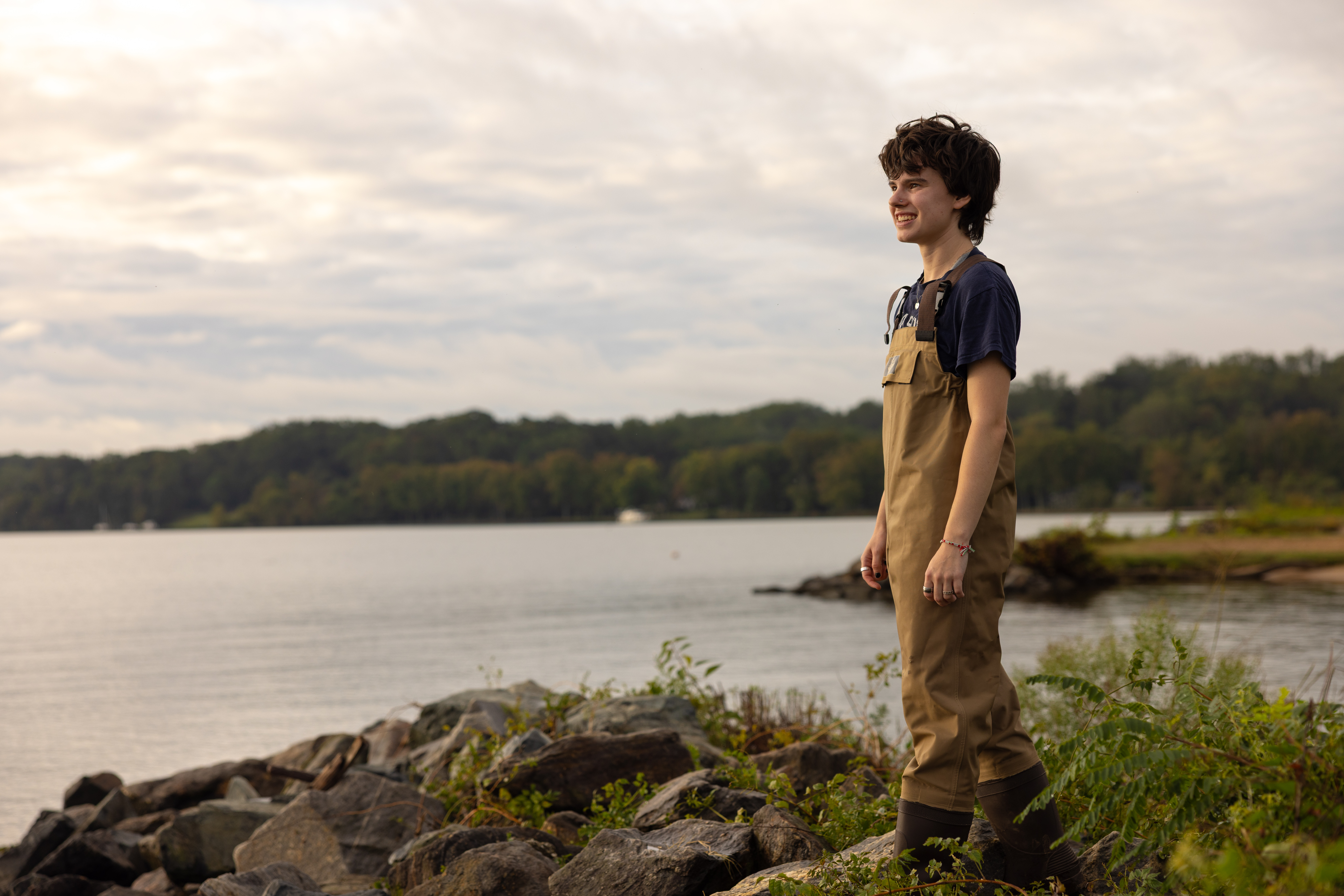
On the water is where environmental science major Kate Stoneman ’26 feels most at home. Committed to understanding how climate change is reshaping the waterways they love, Stoneman balances passion with purpose, from tracking the disappearing Shark Tooth Island with John Tippett, an adjunct instructor, to participating in a NASA-funded study of the Chesapeake Bay with the Smithsonian.
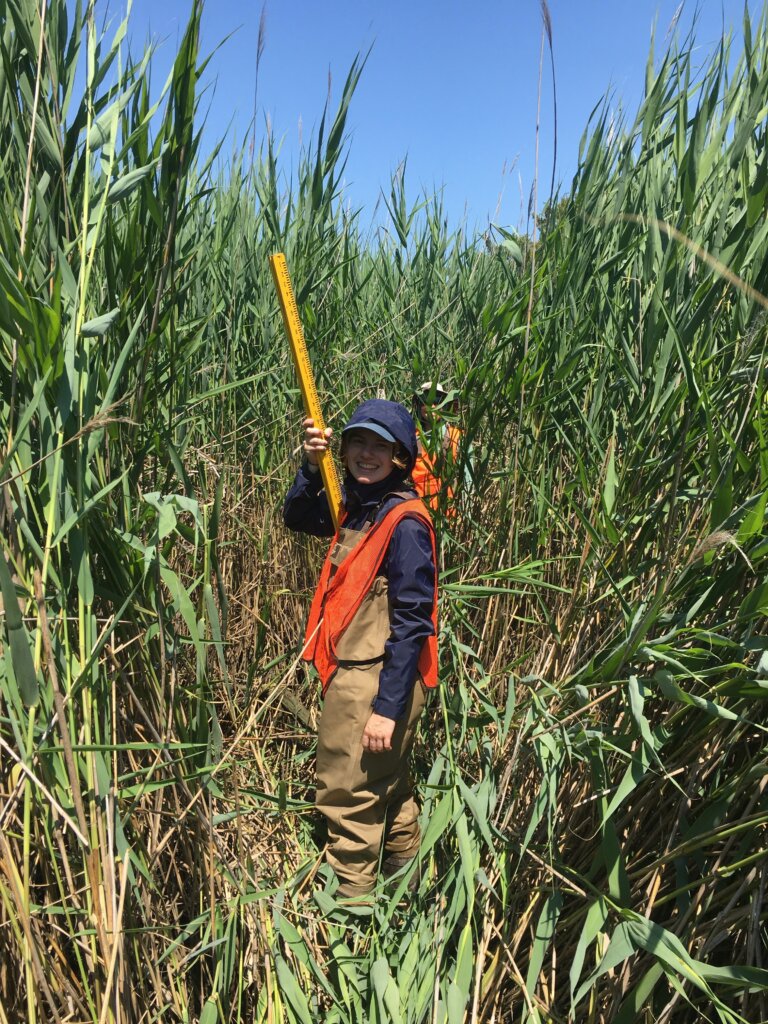
Student standing in a marsh on Shark Tooth Island with a stadia rod.
Stoneman stands in the marsh on Shark Tooth Island with a stadia rod, documenting changes along the island’s disappearing shoreline.
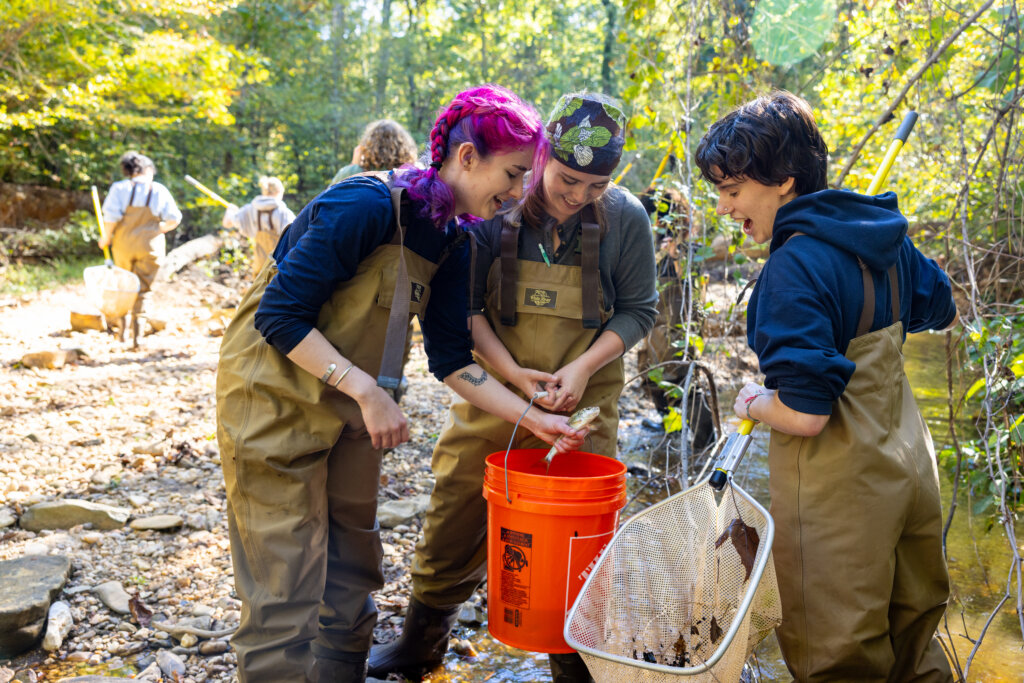
Students looking at a fish caught from Hazel Run in Fredericksburg, VA.
At Hazel Run, Stoneman participates in an electrofishing activity with classmates Anna Wood ’27 and Isla Williams ’26, gaining hands‑on experience in animal ecology with professor Brad Lamphere.
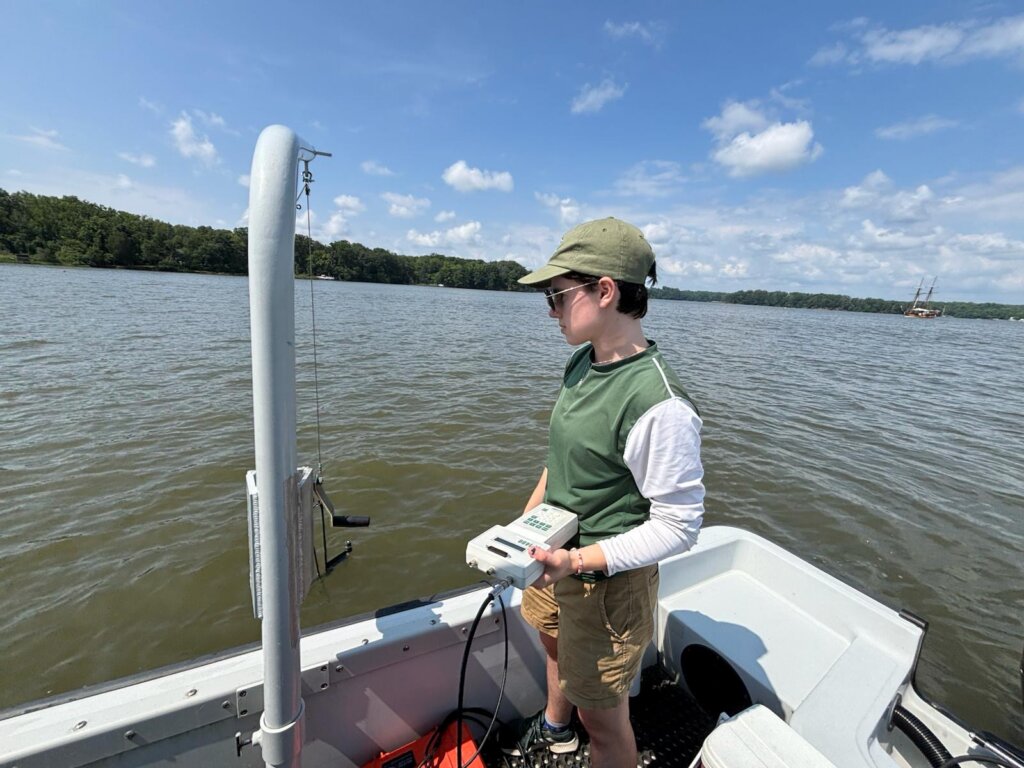
Student standing on a boat holding a li-cor while conducting research on the Chesapeake Bay.
As part of the Smithsonian internship on the Chesapeake Bay, Stoneman measures light attenuation with LI‑COR equipment, contributing to ongoing efforts to monitor and understand the Bay’s shifting environmental patterns.
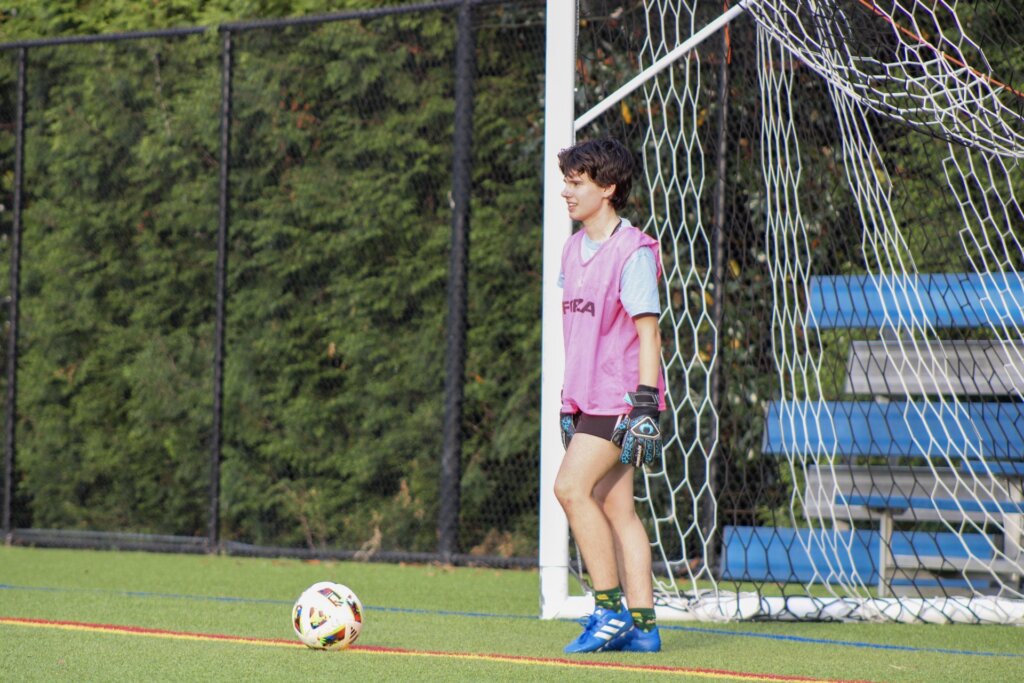
Student on the UMW Club Soccer team standing in goal with a ball on the ground.
A club soccer goalkeeper since freshman year, Stoneman continued with the team through senior year after being hesitant to play soccer in college at all. “I stayed for the community,” they said of joining after a suggestion from a friend.
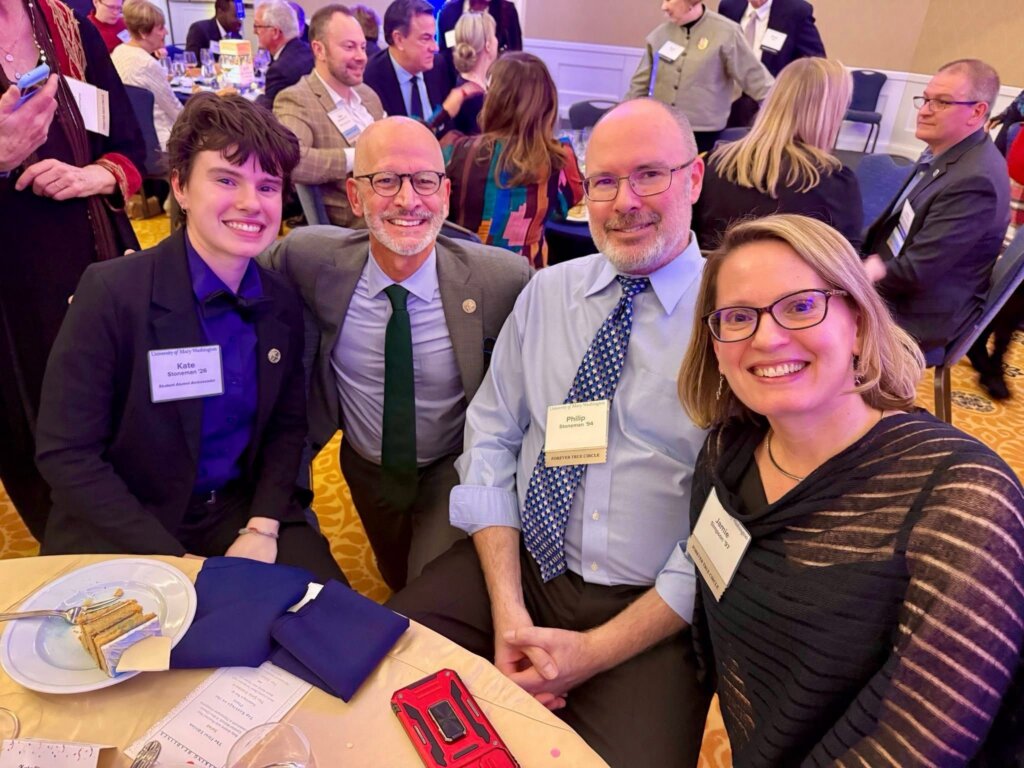
Student sits with President Paino and their parents in Chandler Ballroom at event.
At UMW’s Celebration of Giving in Fall 2025, Stoneman sits with President Paino and Stoneman’s parents, alumni Phil Stoneman ’94 and Jamie Simpson ’97.

Whether they’re singing the praises of the scholarships that helped fund their adventures, playing keeper on the club soccer team or indulging a hobby of plant collecting, Stoneman has made the most of their time at Mary Washington. But it’s through their field work and passion for sustainability that they’ve developed insight to help protect vulnerable ecosystems while educating surrounding communities.

“The most rewarding part of my internship [with the Smithsonian Environmental Research Center] is solidifying my passion for watershed science and meeting so many smart and like-minded people.”
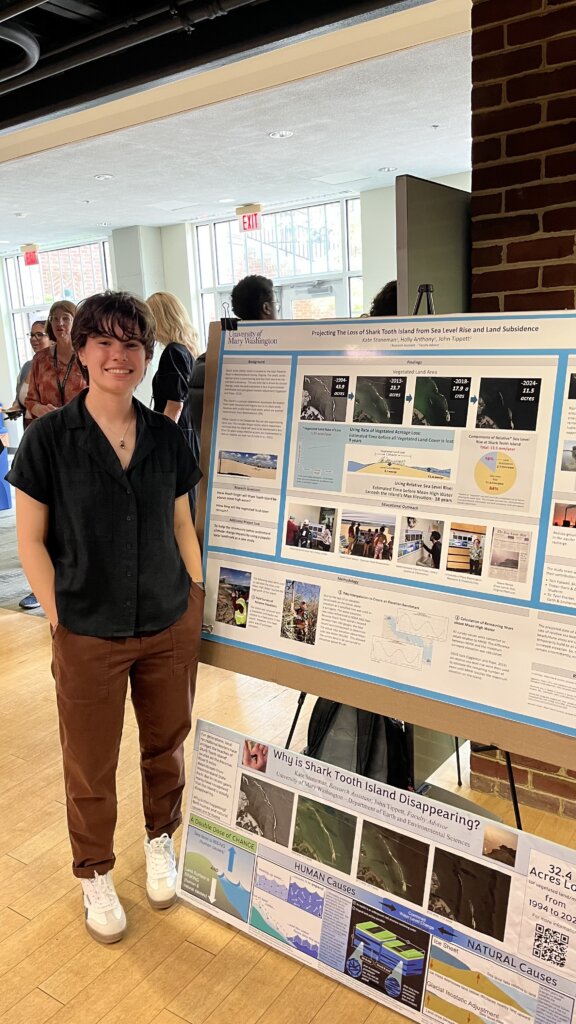
Student standing in front of poster project on Research and Creativity Day.
At Research and Creativity Day in April 2025, Stoneman shares findings from their Shark Tooth Island project, presenting a poster that highlights their field research.
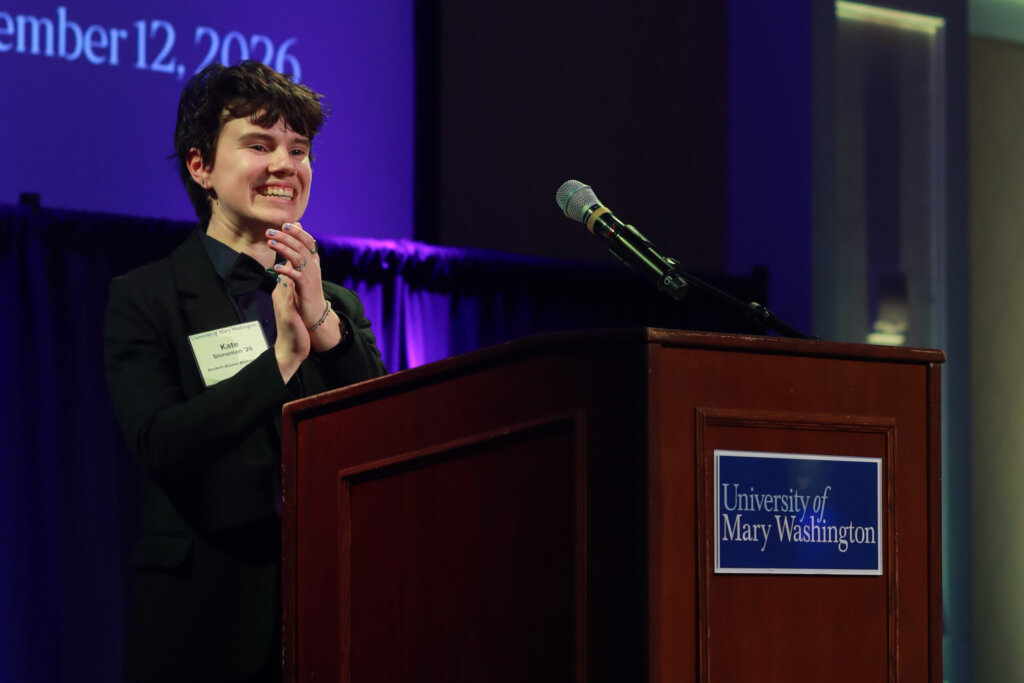
Student standing in front of podium.
At the Celebration of Giving in fall 2025, Stoneman speaks about the scholarships they earned and shares gratitude for the support that has made their research opportunities possible.
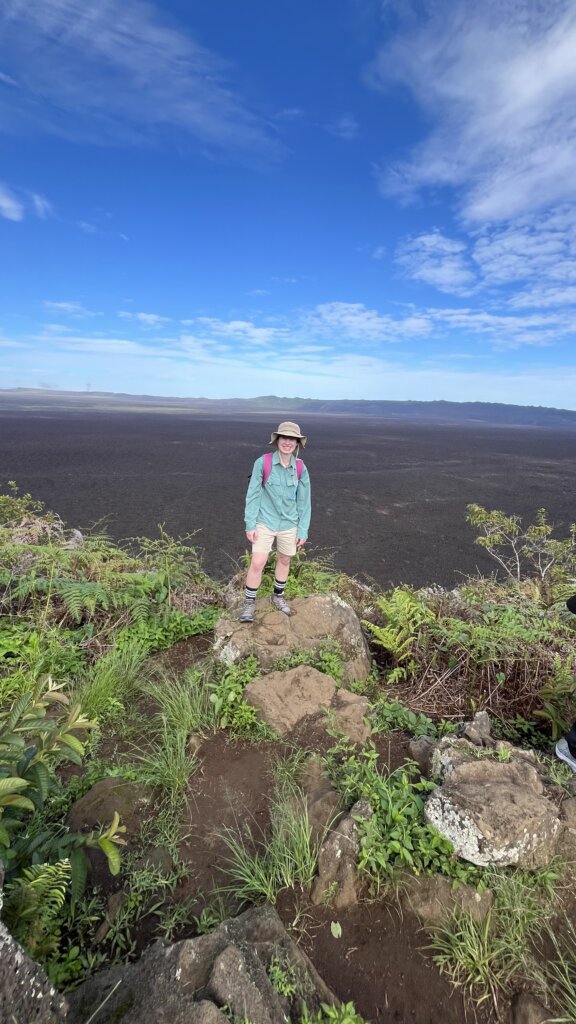
Student stands on the rim of Sierra Negra, overlooking a volcanic crater.
During a UMW’s 2026 study abroad program in the Galápagos, Stoneman stands on the rim of Sierra Negra, an active volcano, overlooking an expansive crater.

What’s next: Stoneman plans to pursue a master’s degree in environmental science, with the goal of conducting continual research on the Chesapeake Bay.
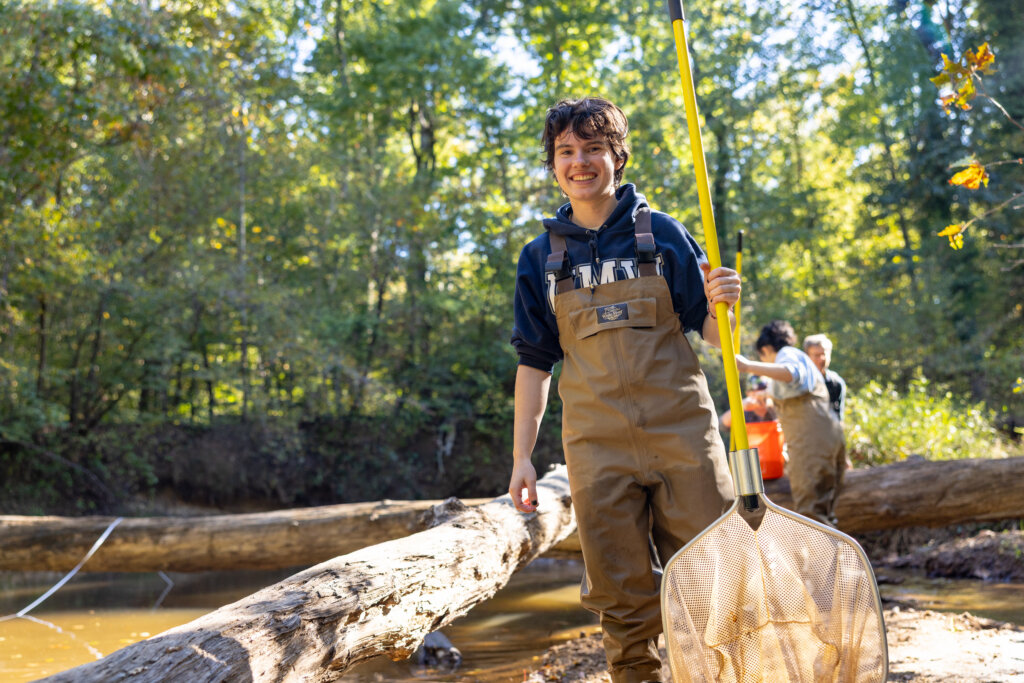
Student holding fish net in a creek.
Wading into Hazel Run with a fish net, Stoneman is in their element—immersed in the hands‑on fieldwork that shapes their environmental science experience and continues to fuel their passions.