UMW Conference Builds Ideas for ‘Reimagining the Liberal Arts in the Age of AI’
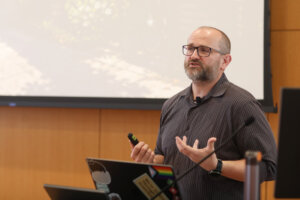
With artificial intelligence on the horizon in higher education, the liberal arts are situated to be long-term leaders in the conversation, as became evident at the University of Mary Washington during its first “Reimagining the Liberal Arts in the Age of AI” conference in July.
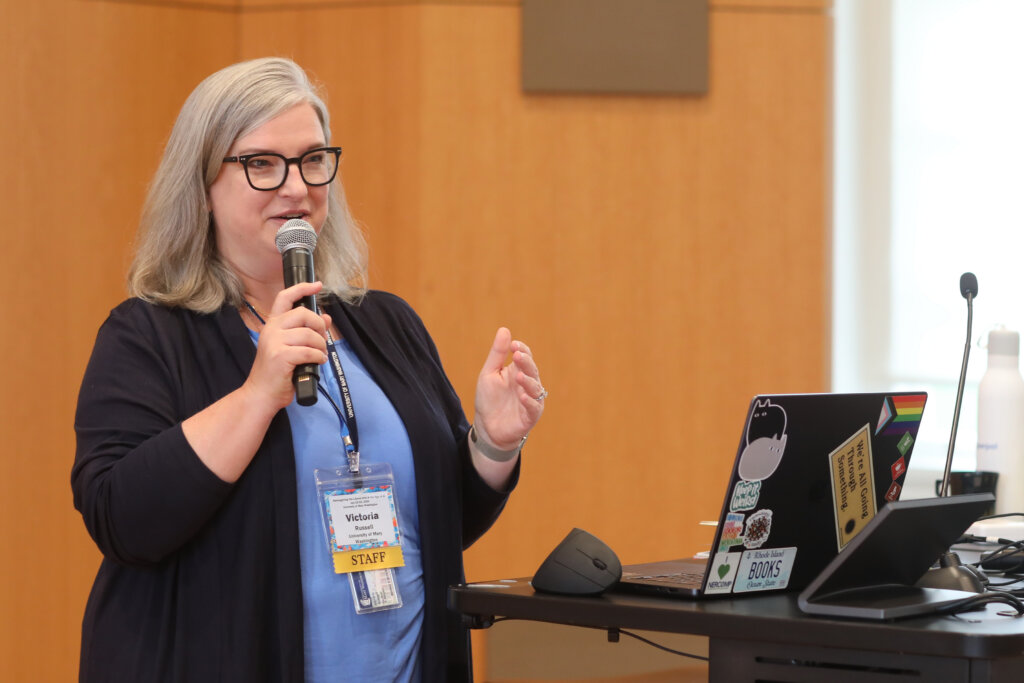
That was the goal for organizers, Associate Professor of Education Victoria Russell, who directs UMW’s Center for Teaching, and Professor of History and American Studies Krystyn Moon, who directs UMW’s Humanities Center. Together, they built the conference from a 2024 grant from the National Endowment for the Humanities (NEH) through the Council of Public Liberal Arts Colleges (COPLAC). That grant supported collaborative curricular design by humanities faculty at five public liberal arts institutions.
As a result of that work, schools had the opportunity to create open-access AI teaching resources, such as syllabus modules, readings, activities and assignments for all COPLAC institutions to utilize. The conference expanded the conversation and learning circles.
“This has been an effort to get the liberal arts to shine,” Russell said. “A lot of the hard work is happening in classrooms, with faculty responding to employers’ needs and helping students navigate the next steps.”
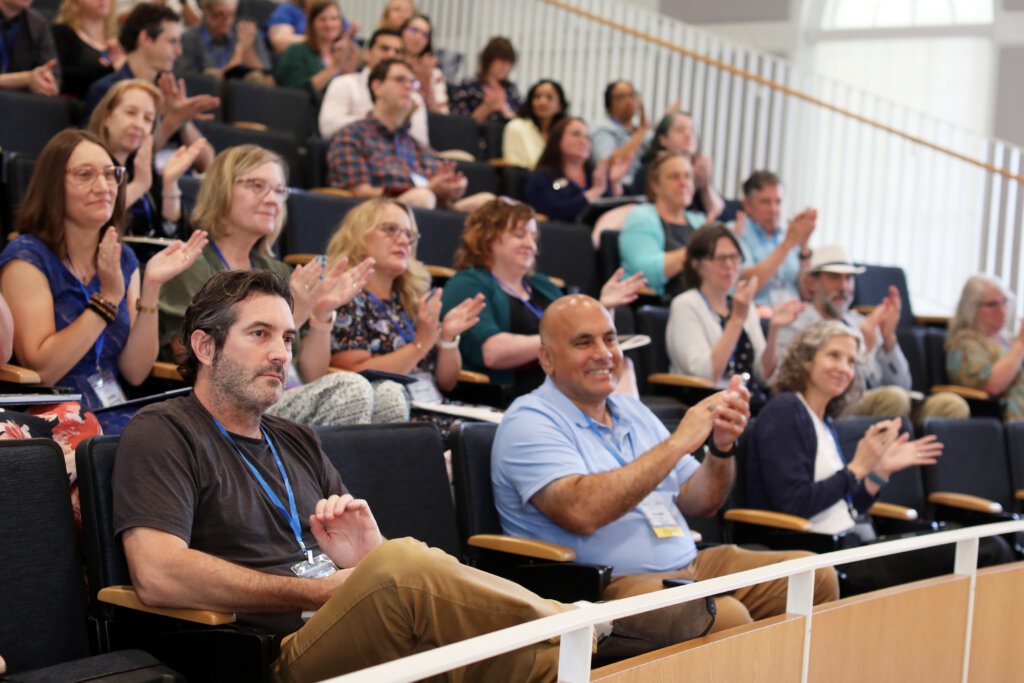
The conference prompted scholars, educators, instructional designers, librarians, technologists and administrators from colleges and universities to explore the intersections of AI, teaching and the liberal arts. It drew in thought leaders from across the East Coast, plus Illinois, Missouri, Ohio, Oklahoma and Tennessee, with registration reaching a pre-set 100-person limit. Conversations emerged from nearly 20 breakout sessions and three keynote talks.
K Pearlman Photography.
K Pearlman Photography.
K Pearlman Photography.
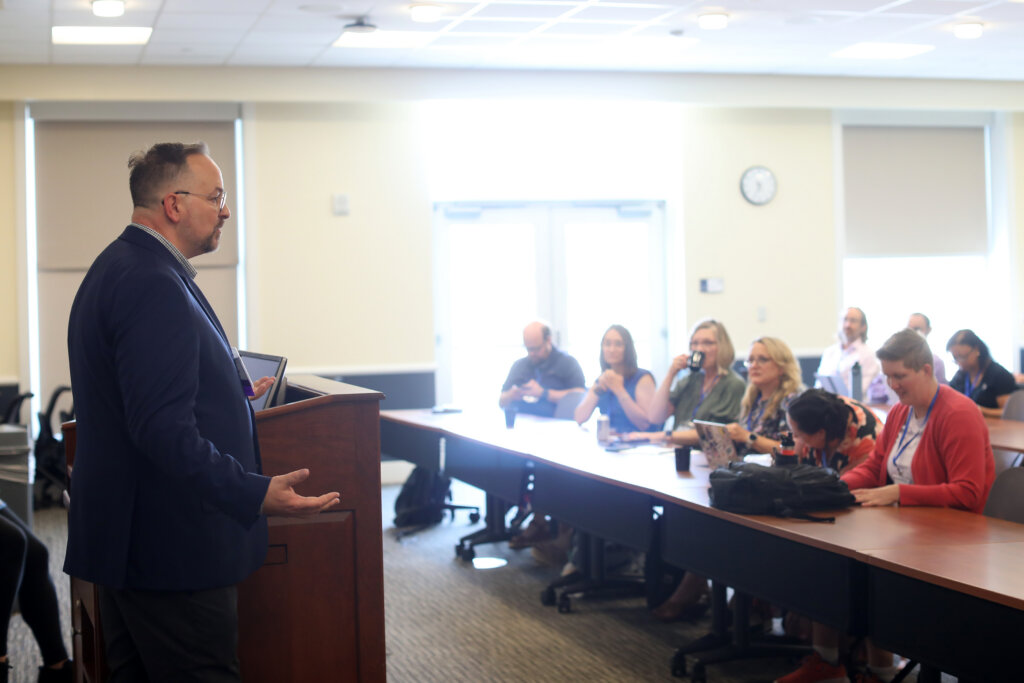
Northeastern University Senior Associate Director of AI in Teaching and Learning Lance Eaton kicked off the event with a keynote address that drew on a construction metaphor to examine how the effects of artificial intelligence in higher ed – especially in the liberal arts – might work.
“I think we can find ways of building it into our classrooms, bit by bit, piece by piece,” Eaton said in his talk, titled “From Awakening to Building: Liberal Arts ‘Next Moves’ for Teaching and Learning in the Age of AI.”
“When cranes arrived, they didn’t simply help builders construct the same buildings more quickly,” Eaton said. “They made entirely new buildings possible. Those new buildings demanded new foundations, new structural systems, new engineering principles and new ways of thinking about the work itself.”
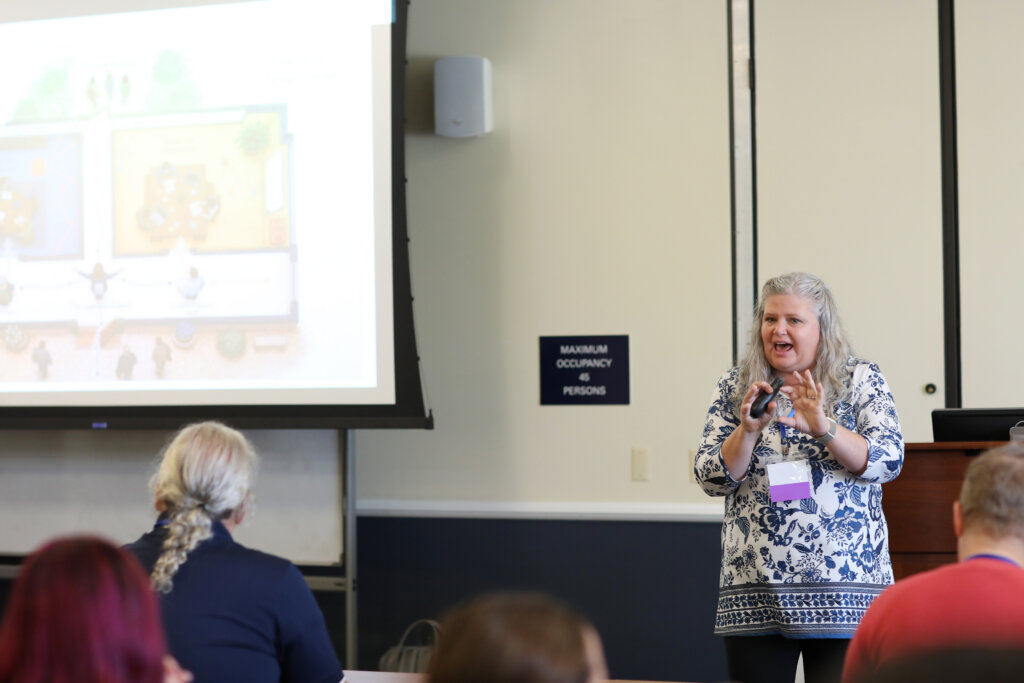
Professor of Communication Anand Rao, who directs UMW’s recently launched Center for AI and the Liberal Arts, spoke about the role of the liberal arts in the ethical development of artificial intelligence. The center’s assistant director, Senior Lecturer of Philosophy Michael Reno, discussed vibe-coding – the use of AI-based software to produce plain-language coding – reflecting on an interface he created with Gemini API that allows students to upload audio files and get feedback on speeches. Moon also spoke about vibe-coding, sharing her experience incorporating it into an assignment for a digital recipe project in her interdisciplinary American Foodways course.
“It’s all about problem solving around AI,” said Moon, who drew from the sciences to find models the humanities could embrace and apply in the class. “I wanted my students to realize that literacy matters and that there are some human things that they can do that AI can’t do.”
K Pearlman Photography.
K Pearlman Photography.
K Pearlman Photography.
Other UMW presenters included Professors of Computer Science Karen Anewalt and Jennifer Polack, Associate Professor of English Brenta Blevins, Professor of French Scott Powers and Visiting Assistant Professor Kaitlyn Haynal.
In addition to Eaton, Appalachian studies scholar Theresa L. Burris and University of Tulsa Professor of Psychology David Rettinger, who also formerly taught at Mary Washington, delivered their own keynote speeches. Burris’s talk touched on the ways in which the liberal arts can inspire authenticity, while Rettinger, a nationally recognized expert on cheating, outlined a positive approach to academic integrity in the age of AI.
Russell led a session on how UMW used the grant, joining forces with fellow COPLAC members to develop curricula and infuse humanist perspectives into responses to AI. She likened it to “Building Sandboxes in a Tornado” – the title of her talk and another constructive metaphor for how the liberal arts can foster community and dialogue within the world of AI.