UMW Students Post Strong Showing on National Latin Exam as Program Grows
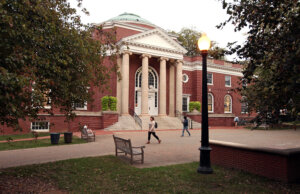
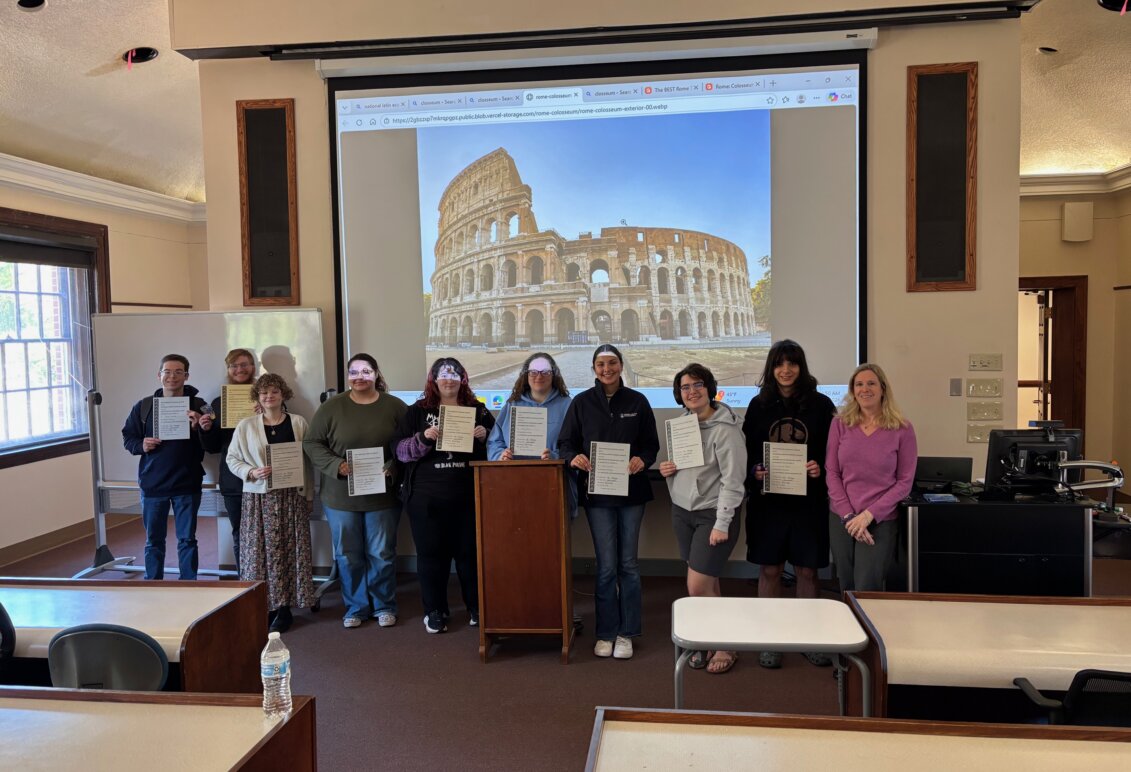
Students at the University of Mary Washington have achieved standout results on this year’s National Latin Exam, with 18 earning top distinctions. The total more than doubles last year’s seven honorees and reflects continued momentum for UMW’s growing classical studies program.
Taken by more than 100,000 students annually across all 50 states and internationally, the National Latin Exam recognizes achievement in Latin language and culture, with questions spanning grammar, vocabulary, Roman history, classical literature and mythology. The exam is based at Mary Washington, with its home office in James Farmer Hall, and is sponsored by the American Classical League.
Among this year’s honorees, three students earned the highest distinction of Gold Summa Cum Laude, four received Silver Maxima Cum Laude, six earned Magna Cum Laude and five achieved Cum Laude recognition.
- Gold summa cum laude – Tressa Ballard ’27
- Gold summa cum laude – David Fitzpatrick ’27
- Gold summa cum laude – David Segovia Menjivar ’28
- Silver maxima cum laude – Charlie Pargoe ’29
- Silver maxima cum laude – Maggie Robbins ’28
- Silver maxima cum laude – Erika Marie Tross ’28
- Silver maxima cum laude – Lily Heiner ’29
- Magna cum laude – Zenith Guerin ’28
- Magna cum laude – Sophia Heinbach ’27
- Magna cum laude – Fania Mercedes Ocasio ’29
- Magna cum laude – Ember Burke ’29
- Magna cum laude – Spencer Lombardo ’27
- Magna cum laude – Kelsey Skees ’26
- Cum laude – Lily Payne ’29
- Cum laude – Samantha Wall ’28
- Cum laude – Alexander Oliver ’27
- Cum laude – Megan Pope ’28
- Cum laude – Vesper Padgett ’27
The results follow a recent redesign of the introductory Latin curriculum led by Professor of Classics Angela Pitts and Visiting Assistant Professor of Classics Rebecca Boyd. The department adopted a new textbook for entry-level Latin courses, placing greater emphasis on reading extended passages and learning grammar in context.
“We wanted students to experience the payoff of studying Latin as early as possible,” Boyd said. “By second semester, they’re building the skills to read authentic texts.”
UMW students in Latin 102 are now reading Ovid’s myth of Daedalus and Icarus, highlighting the program’s focus on engaging directly with classical literature. Interest in the discipline is also growing, Boyd said, with the University seeing increased numbers of students majoring in classical studies and classical archaeology. Alongside art history, anthropology, philosophy and religious studies, these fields make up UMW’s Department of Cultural and Philosophical Inquiry. An active, student-led Classics Club meets weekly, fostering a strong community beyond the classroom.
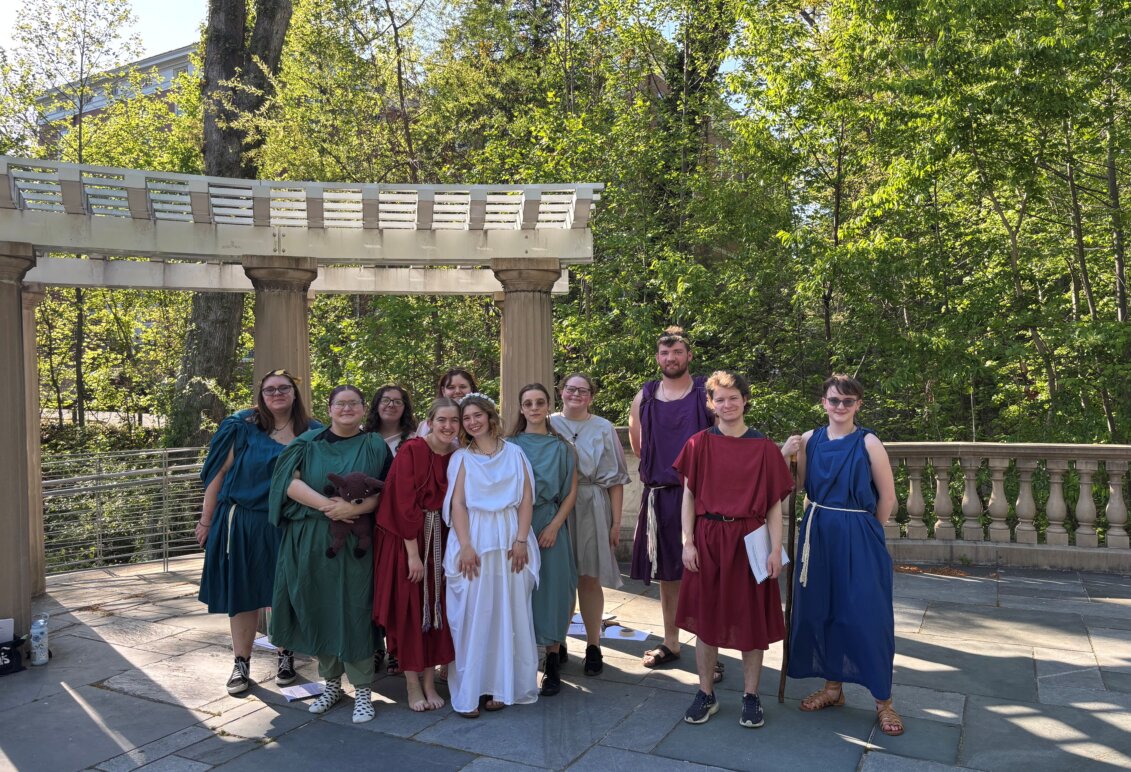
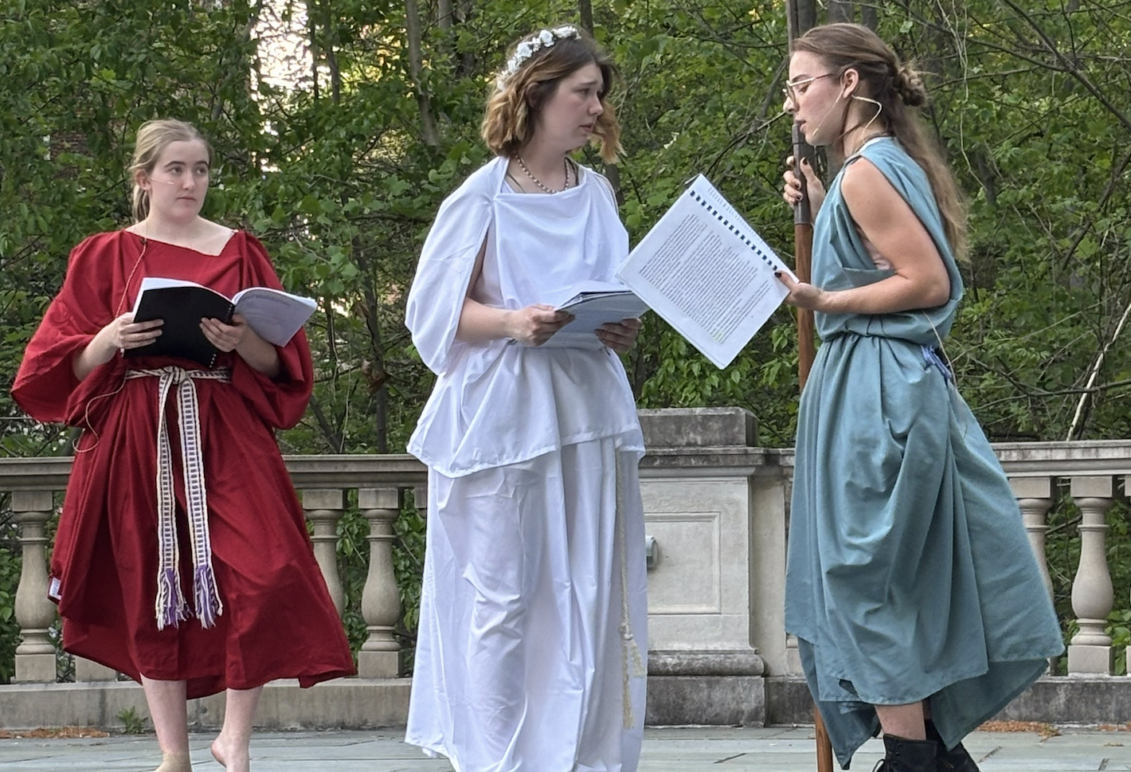
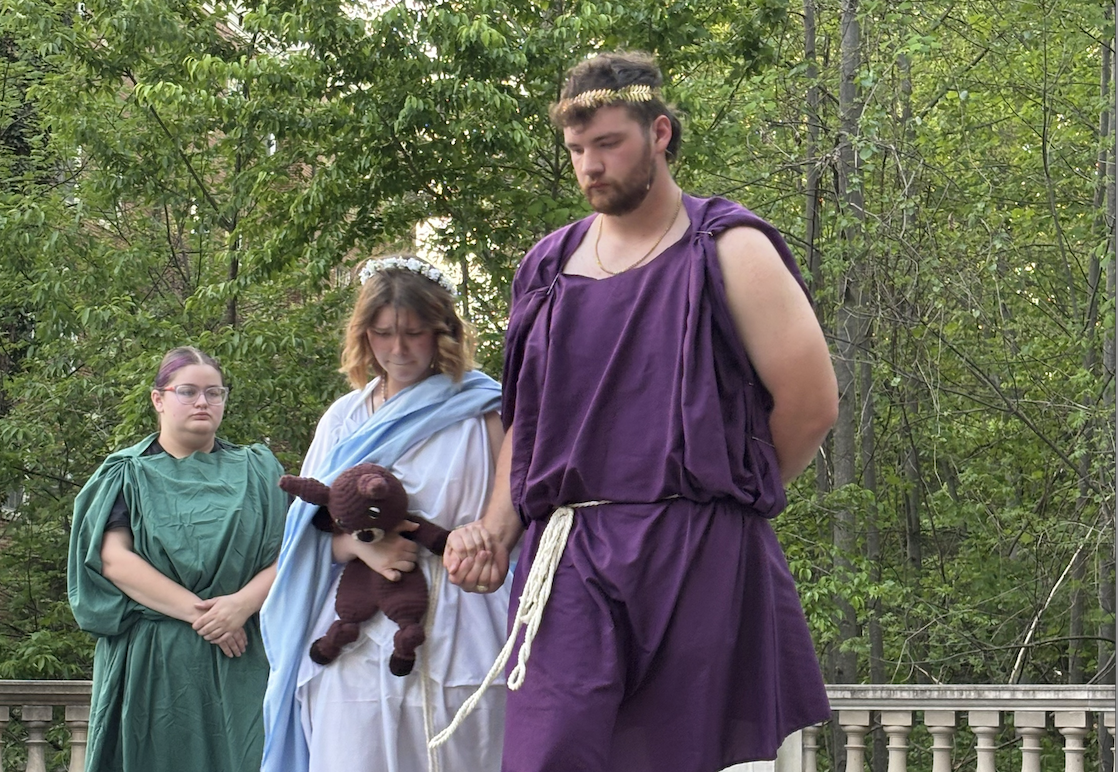
This energy was on display recently when students studying Greek brought their semester-long translation of Euripides’ Iphigenia at Aulis to life in a performance at UMW’s Heslep Amphitheatre. Beyond translating the notoriously challenging ancient Greek text into English, they designed the production themselves, crafting costumes and props by hand.
“This work showcases students adapting what they’ve learned in the ancient language classroom into a living, creative experience,” Pitts said.
For more information, visit UMW’s Classical Studies or Department of Cultural and Philosophical Inquiry webpages or the National Latin Exam website.