Across Disciplines, UMW Students Put Their Work on Display at Research and Creativity Day
A map tracing pollution threats to the Chesapeake Bay. An experiment repurposing a common heartburn medication to help kill cancer cells. A computer model built to predict sports injuries before they happen. Intricate artwork transforming a gallery space. A scene unfolding onstage.
At the University of Mary Washington, these aren’t hypothetical scenarios – they are real student projects presented at Research and Creativity Day, an annual tradition on the last day of classes that has now spanned two decades. The spring event brings together student research and creative work from nearly every major, with scientific studies, art exhibitions and performances filling venues across campus.
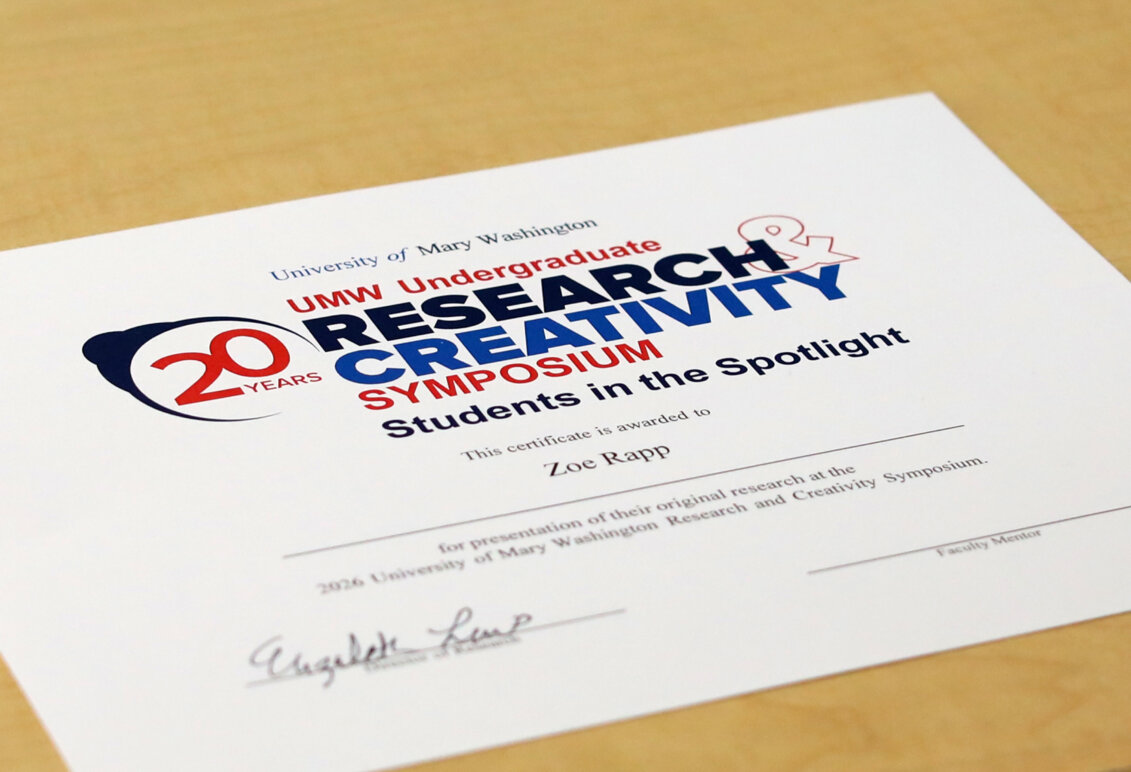
This year’s culminating symposium, hosted in the Hurley Convergence Center (HCC), closed out a weeklong celebration marking the event’s 20th anniversary. For the full story of how the day began and grew, see Research and Creativity Day Turns 20: A Celebration of Undergraduate Work Decades in the Making.
“I think the students really enjoy explaining their research to other students,” said Director of Undergraduate Research Betsy Lewis. “Even at the end of a busy week, there’s still a lot of energy at the final symposium.”
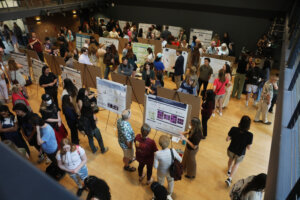
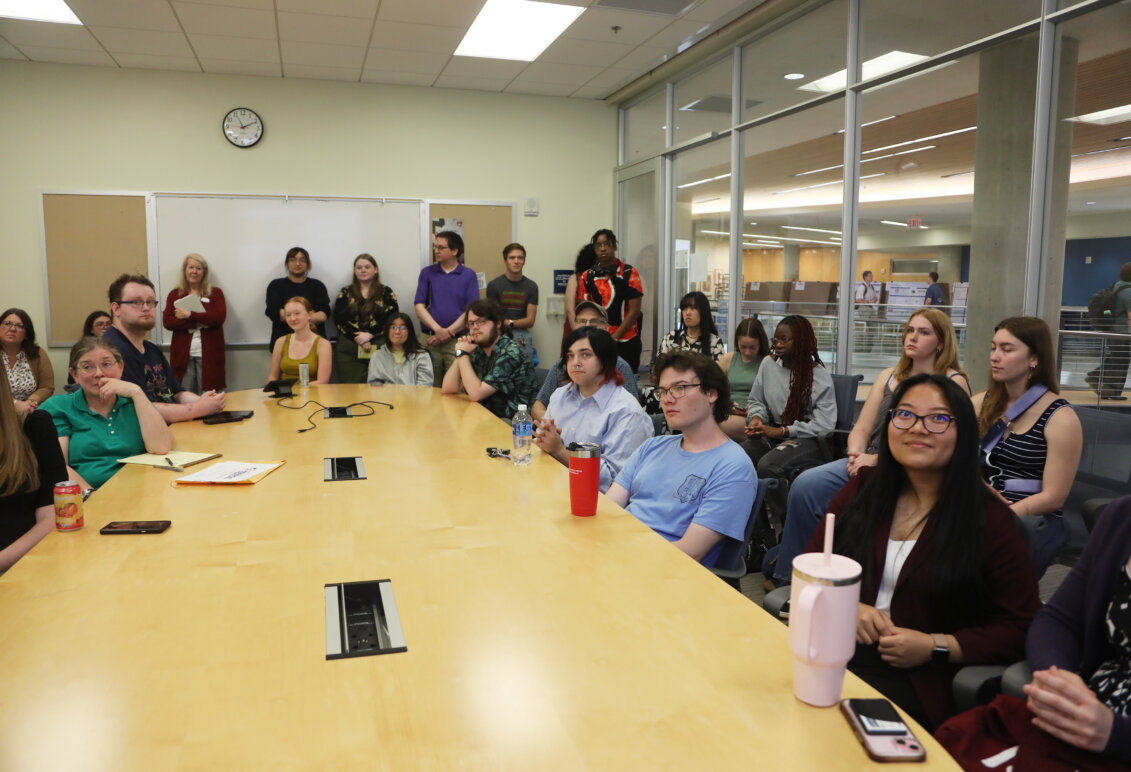
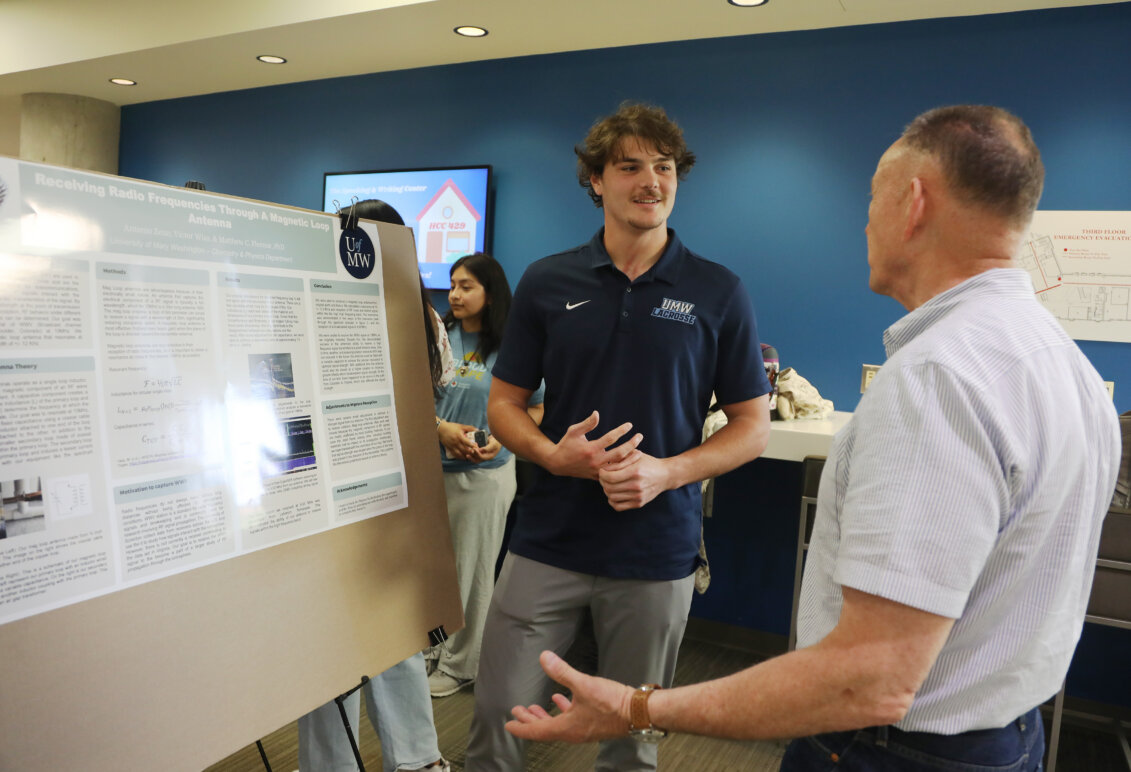
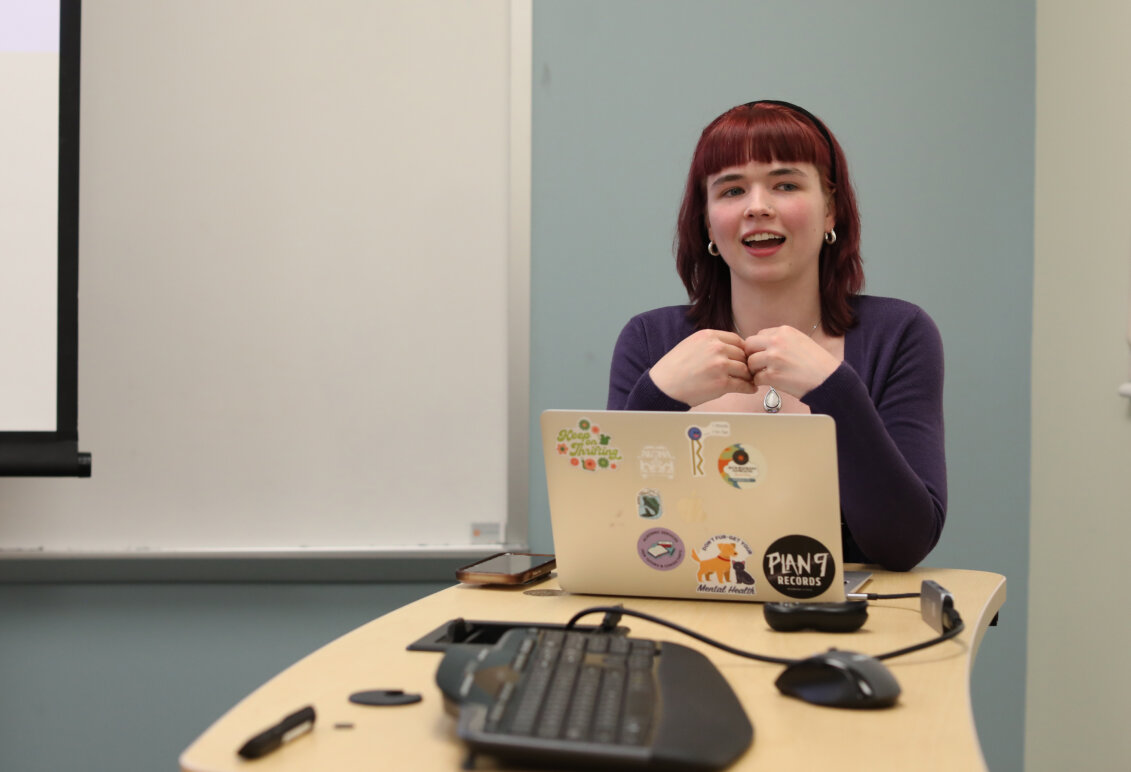
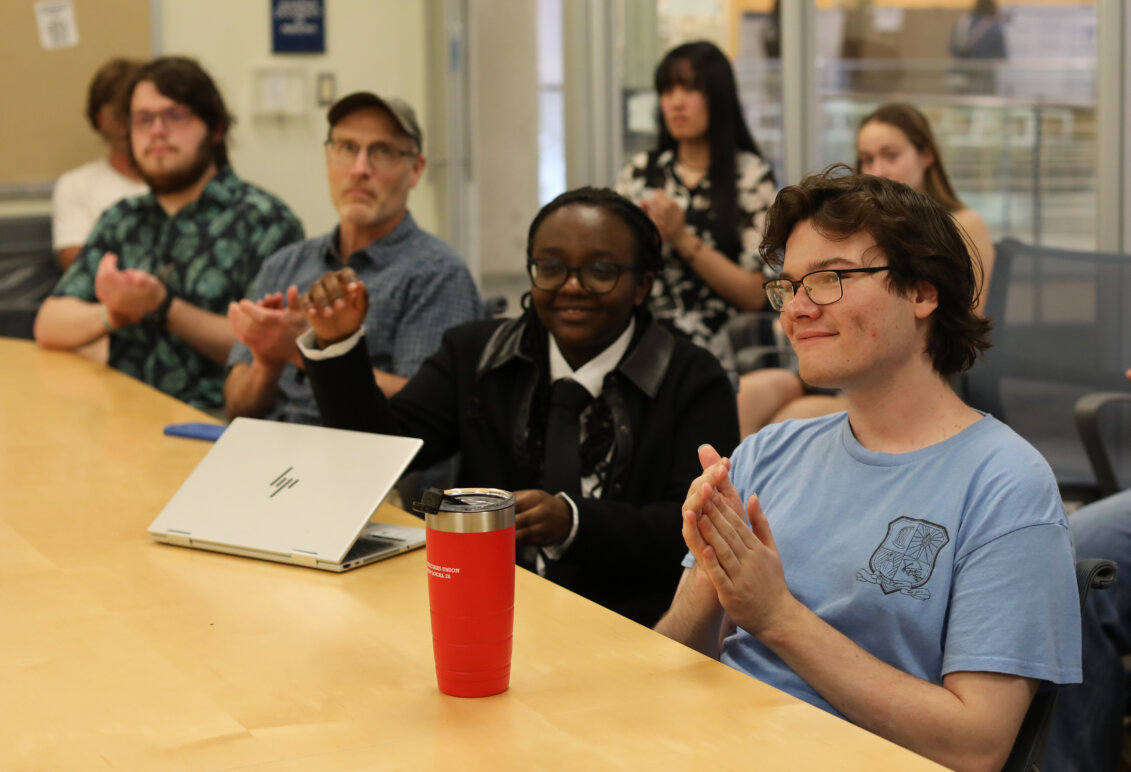
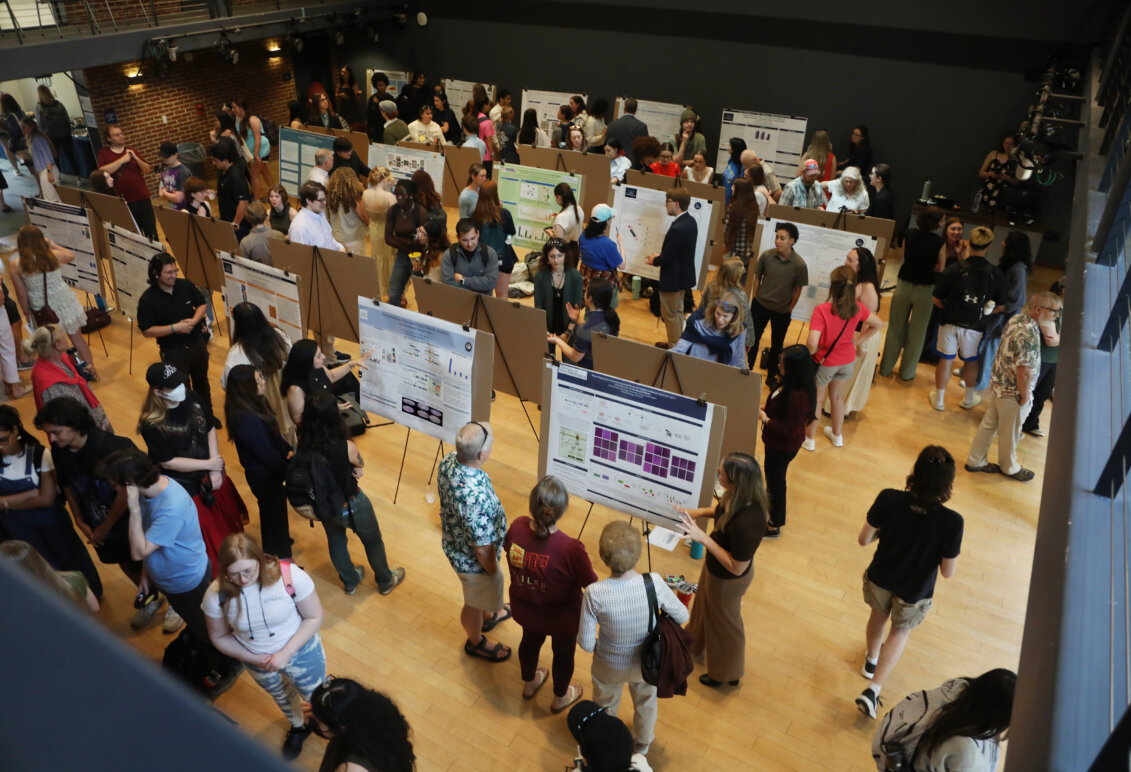
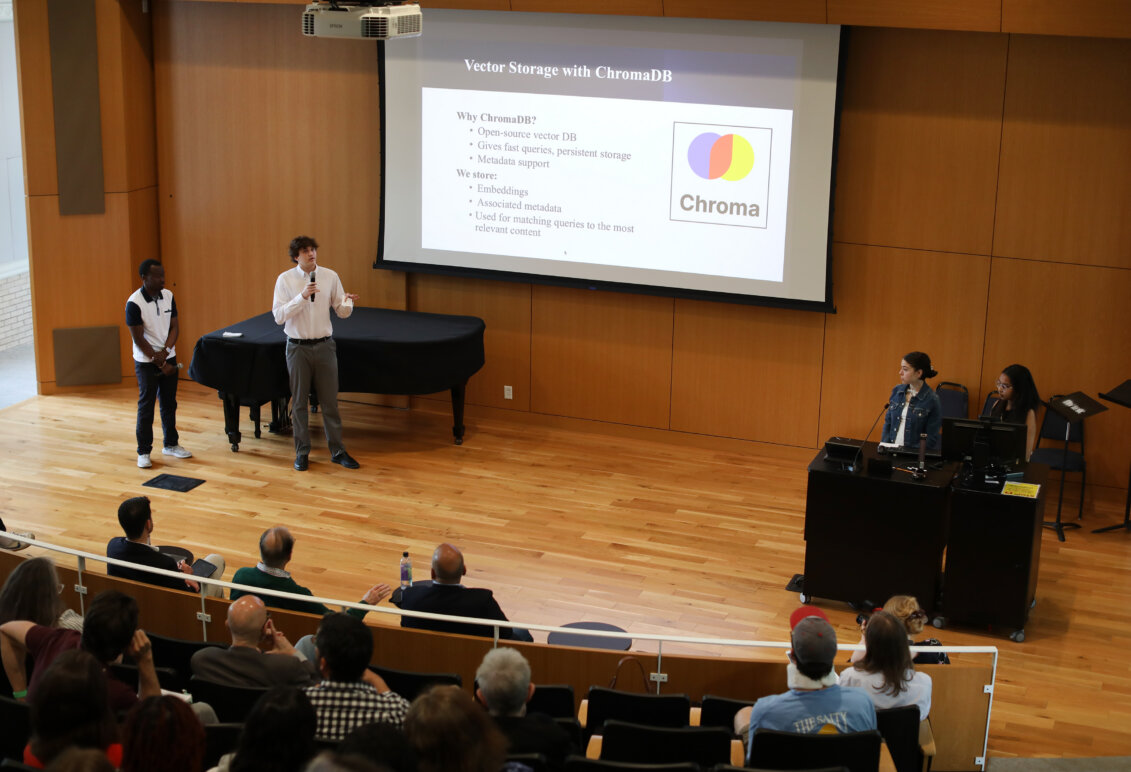
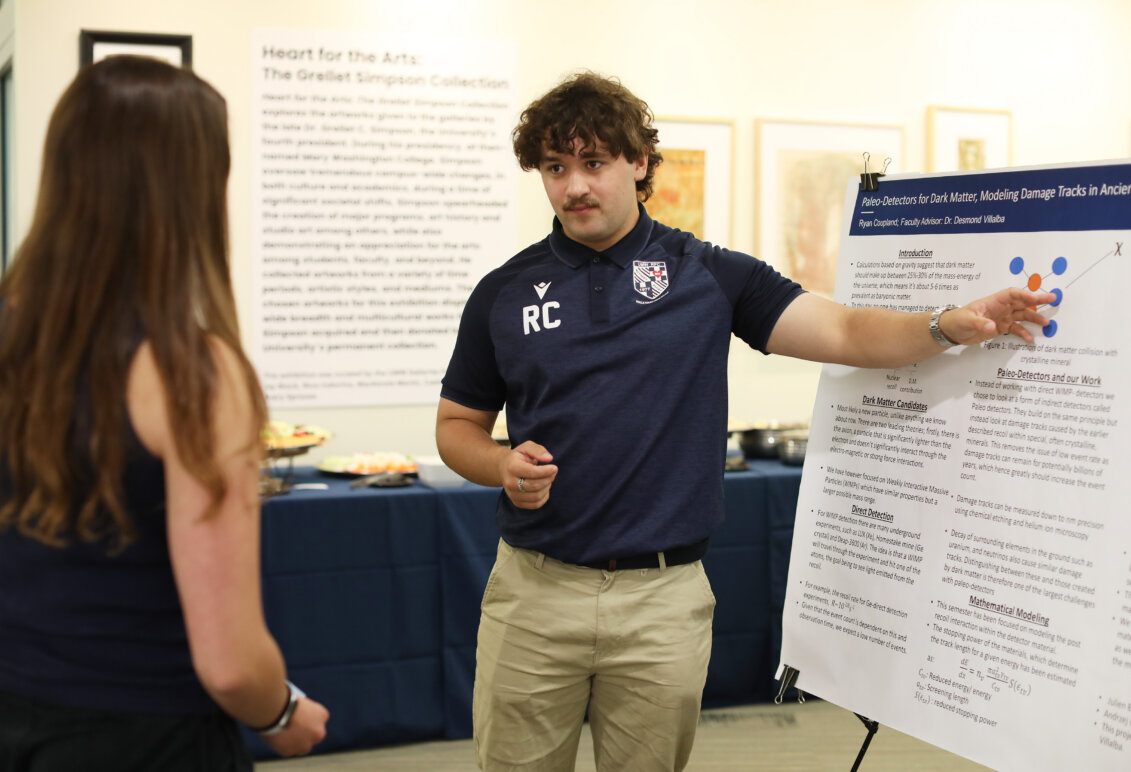
That buzz was on full display in the HCC, where students, faculty, staff and the public spread out across classrooms, hallways and the digital auditorium to view the work of roughly 130 student presenters. The packed house gave the event the feel of a professional academic conference, offering presenters valuable networking and public speaking experience in the process.
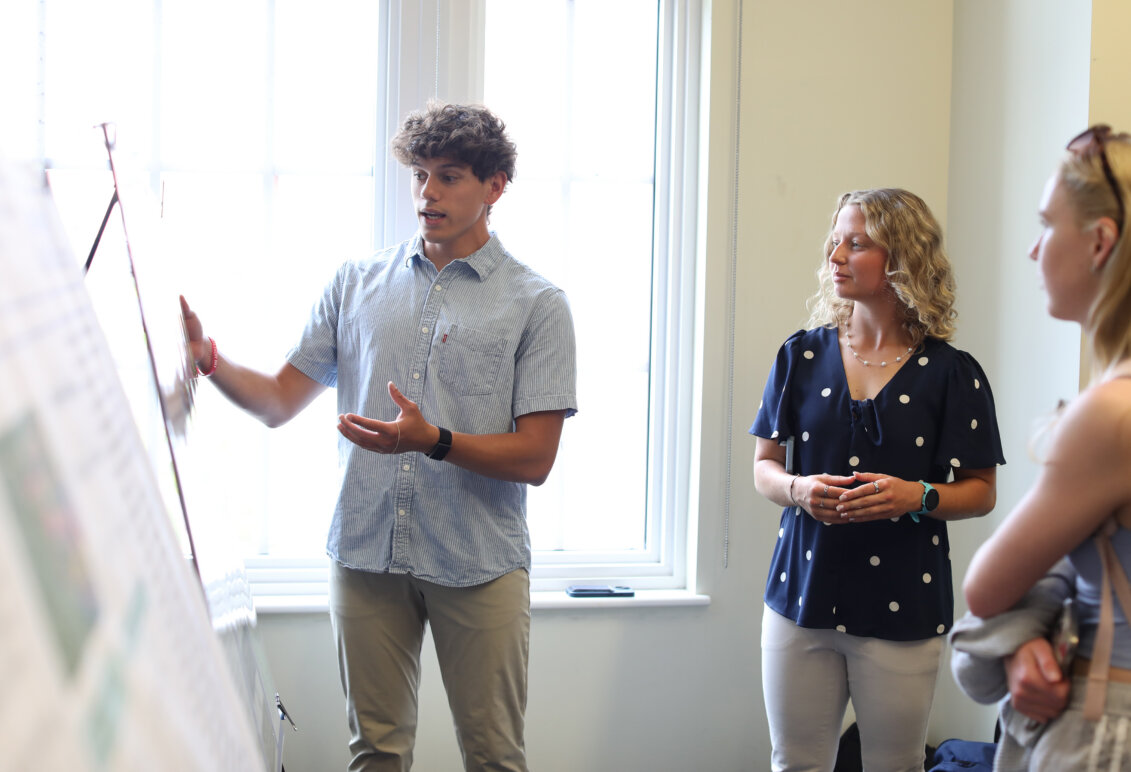
Seniors Larry Almariento and Reagan Makfinsky combined their geospatial analysis and environmental science knowledge to examine how well the protected buffer zones along waterways are functioning under the Chesapeake Bay Preservation Act. By mapping areas that could be at risk of violation, their work offered insights that could help local governments better manage development while protecting water quality.
“It was interesting to take something that is an actual policy and apply it in a practical way,” Almariento said. “Knowing this kind of work can help communities and contribute to protecting the environment made the project feel meaningful.”
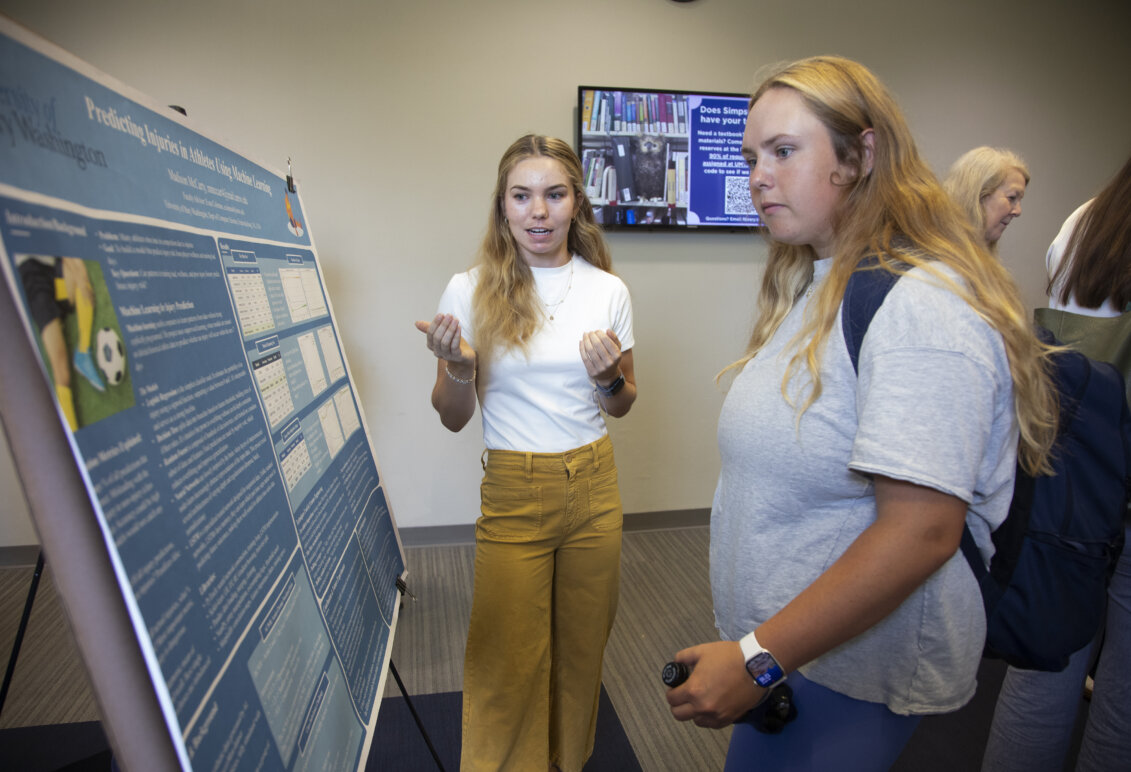
Senior computer science major Madison McCarty set out to understand whether machine learning could help predict sports injuries before they occur. McCarty, who is also on the UMW tennis team, said the project grew out of personal experience. “I wanted to see if there was a way to identify risk earlier and prevent injuries,” she said, noting that future work could expand across different sports and more datasets.
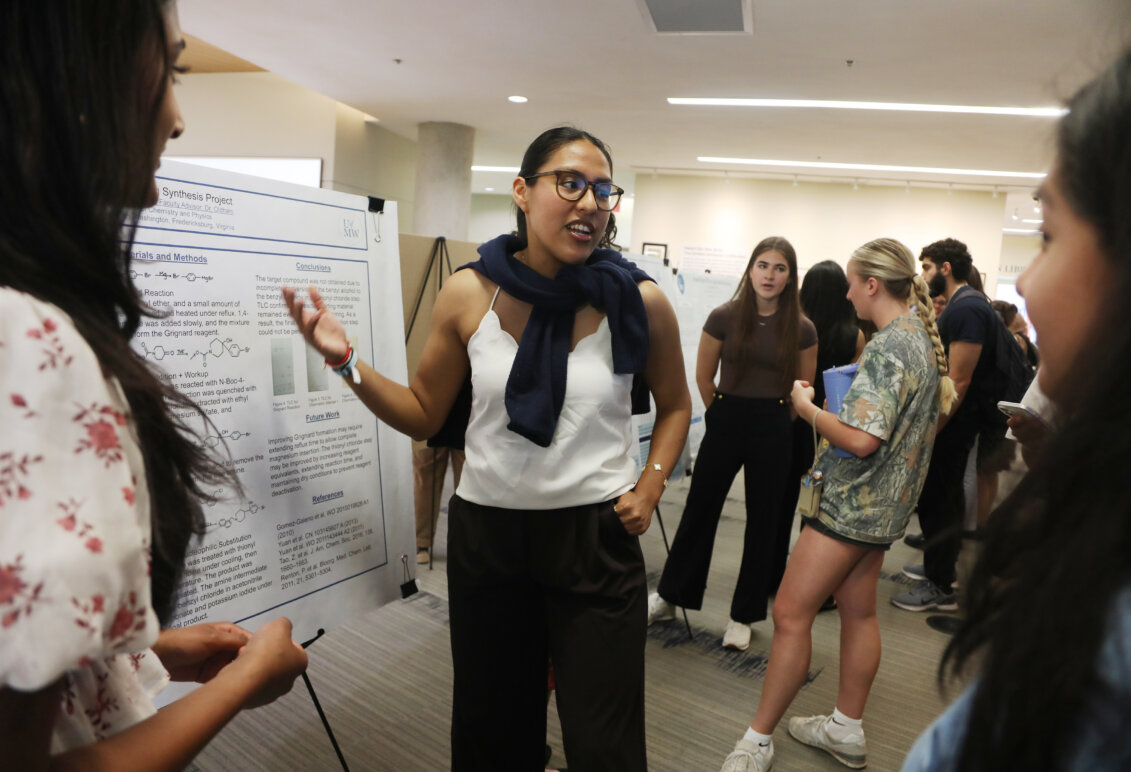
Sophomore Franco Trujillo, pursuing a major in biochemistry and a minor in French, explored whether a widely used acid-reducing drug could be repurposed to kill cancer cells. “I’ve always been interested in cancer research,” said Trujillo, who picked the topic because relatives had battled the disease. “Learning laboratory skills and how to design experiments so the data is reliable were among the most rewarding aspects of this project.”
Faculty mentors also play a key role throughout the process. Trujillo worked alongside Associate Professor of Chemistry Randall Reif, while McCarty was guided by Assistant Professor of Computer Science Evan Coleman. Almariento and Makfinsky were assisted by Adjunct Instructor of Earth and Environmental Science John Tippett.
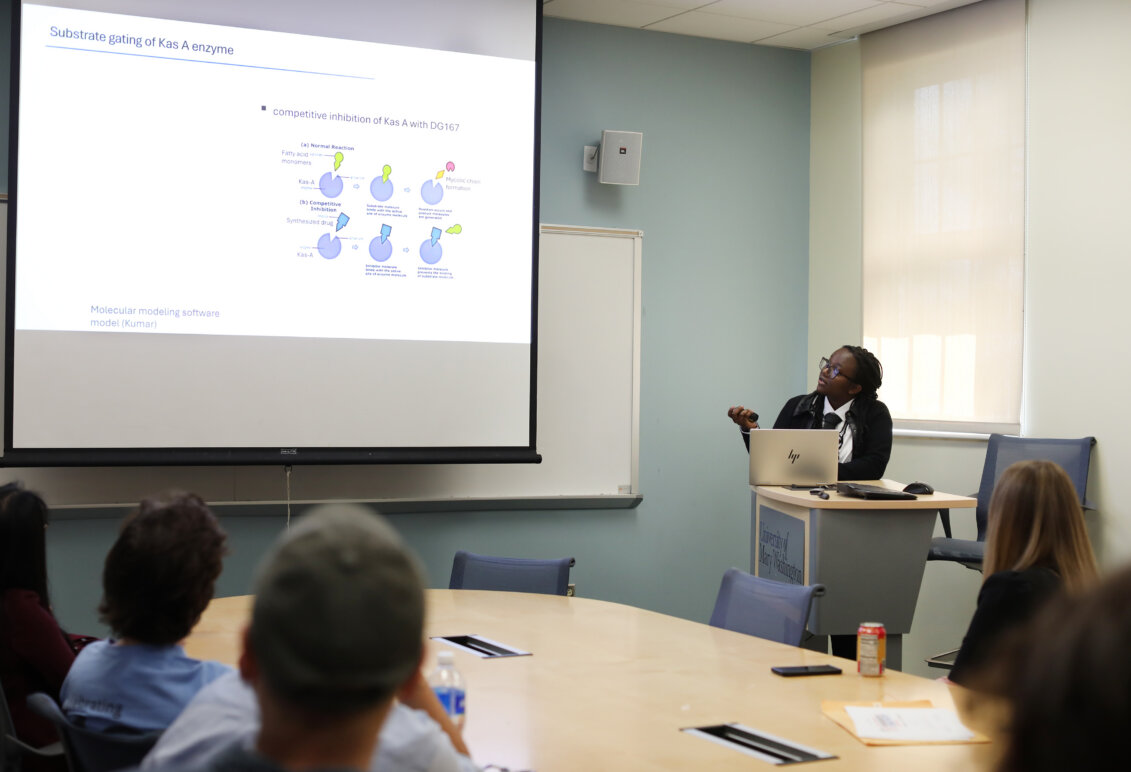
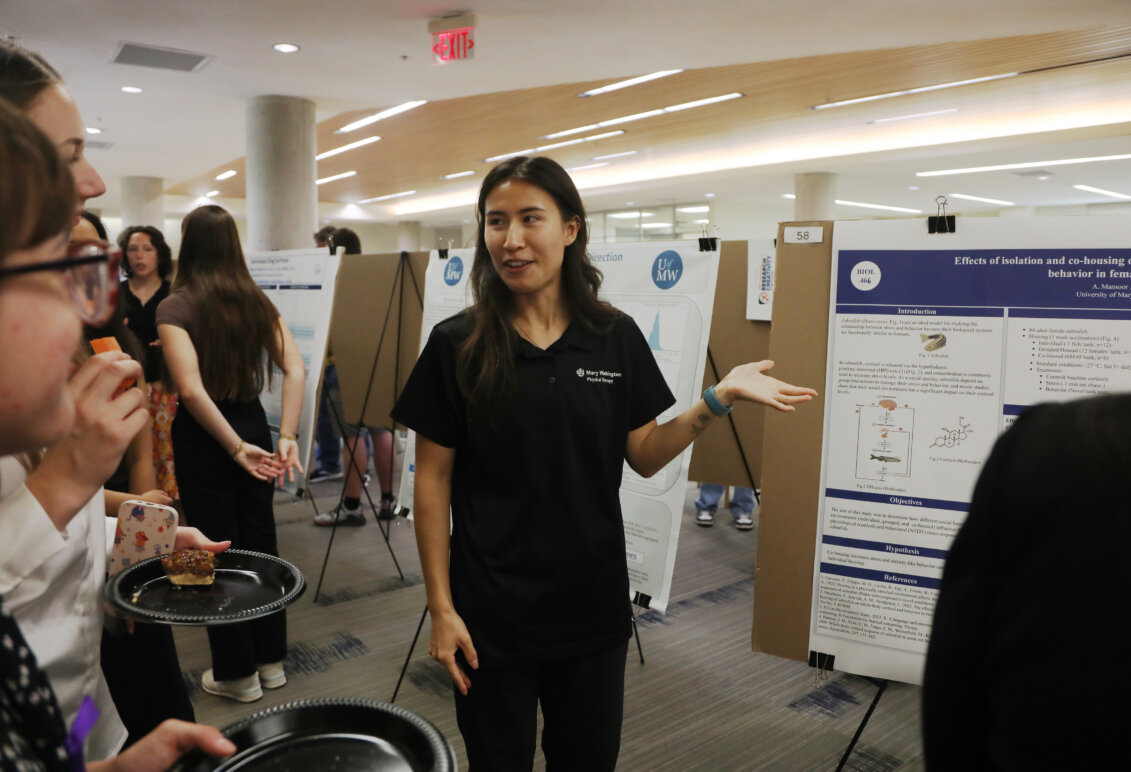
In biology, Assistant Professor Laura Sipe works with her students on research aimed at improving how the immune system targets breast cancer cells. “Each student group has their own little piece of the puzzle,” Sipe said. “But we’re all working together to understand how to change the way these cancer cells die.”
For senior studio art major Madison Hinton, presenting her work is both a culmination and a starting point. “This project is sort of a first step into the professional world of art,” she said. “I want my practice and my experience to show in the work.”
Junior theatre major Maddie Chin saw the event through an even broader lens. “Research and creativity are some of the basics of our humanity – we want to learn more and we want to be creative,” she said. “Research and Creativity Day is something everyone should experience.”
That desire to share their work is something faculty have long noticed. “They’re eager to share what they’ve been doing and have a real excitement about it,” said Professor of Geology Grant Woodwell, one of the event’s co-founders. “They arrive on Research and Creativity Day ready to perform.”
For Lewis, that excitement is exactly the point. “It’s a chance for the University community to celebrate them and the work they’ve done,” she said.