
COVID-19 in Context is an eight-week online summer course starting June 1, 2020 that is open to UMW students, faculty, staff, alumni, and the broader community.
Every Monday and Wednesday at 4 pm, faculty from various disciplines will broadcast a 30-minute lecture followed by an interactive Q&A session. Each session will look at a different aspect of the COVID-19 crisis. And it all takes place remotely, delivered to your phone, tablet, or computer via Zoom. All you need is internet access.
UMW Students
Current and incoming UMW students who wish to take the course for credit will be admitted into the Canvas course. The course is pass/fail only, and students who pass will be awarded 3 credits of IDIS 300P on their fall 2020 UMW transcript at no additional cost. Students who are not planning to enroll in the fall 2020 term or who withdraw from the fall 2020 after enrollment will not receive credit for IDIS 300P.
In addition to the lectures from 4 to 5 pm, for-credit students will complete the following:
- weekly readings
- small-group discussions after each lecture from 5 to 5:30 pm
- short weekly quizzes on the presentations for that week
- a 3- to 5-page reflective paper at the end of the semester
Registration
Registration is now closed, but all are invited to watch the recorded lectures linked below.
Resources:
The Virginia Department of Health maintains a call center to answer questions about COVID-19. Staff are available Monday through Friday from 8:00 a.m. to 4:30 p.m. to provide pandemic information. The phone number is (540) 899-4797.
Additionally, the VDH maintains an updated, daily count of COVID-19 cases in Virginia at: https://www.vdh.virginia.gov/coronavirus/
Facilitators
COVID-19 in Context is facilitated each week by:
 Dr. Keith Mellinger, Professor of Mathematics and Dean of the College of Arts and Sciences
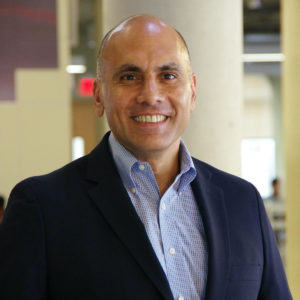 Dr. Anand Rao, Professor of Communication and Chair of the Department of Communication and Digital Studies
Course Schedule


The Biology of Covid-19
June 1, 2020, 4:00 pm
A coronavirus is a type of virus that frequently causes symptoms similar to the common cold, and spreads the same way. However, we know that this current virus, called SARS CoV-2, appears to be much more contagious and causes far more serious impacts on society than a typical cold. Our presentation will examine the basics of the SARS CoV2 virus, including basic structure and how it is transmitted. Then we will examine how this virus invades and infects our bodies and how/why it elicits the devastating effects that we have observed over the past few months. Finally, we will examine how we know that there are different strains of the virus and what that may mean for a vaccine.


Public Policy and the Pandemic: Lives versus Livelihoods
June 3, 2020, 4:00 pm
For months we have experienced the costs of social distancing policies implemented to reduce the suffering and death associated with COVID-19 infections. Increases in COVID-19 infections will be a significant cost associated with lifting those social distancing policies in order to reduce the costs they impose. This will be a discussion of the costs and benefits of social distancing and an economic approach to evaluating alternative public policies to address the COVID-19 pandemic.


Communicating COVID-19: How We Talk About a Pandemic Changes What We Do
June 8, 2020, 4:00 pm
Communicating COVID-19: How We Talk About a Pandemic Changes What We Do
“Flatten the curve,” “shelter in place,” “R-naught,” “Pandemic”
The language we use won’t make COVID-19 go away, but the way we discuss it can change how effective our policies will be to combat its spread. In this talk, we will analyze how scientific data was communicated to the public, and how effective policymaking is dependent upon effective communication strategies.


COVID and the 2020 U.S. Presidential and Congressional Elections
June 10, 2020, 4:00 pm
The COVID-19 pandemic has already profoundly impacted this year’s presidential and congressional elections. In this talk we will examine how political parties, candidates, and voters are responding to the public health crisis and reshaping the battles for the White House and Congress.


COVID’s Effects on Climate Change
June 15, 2020, 4:00 pm
The COVID-19 pandemic has underscored the importance of addressing the climate crisis. Although COVID-19 is taking an economic toll and causing loss of human lives today, if we do not act immediately, the climate crisis will cause an even larger economic impact and take millions of lives from polluted air and water. In this talk, we will discuss the potential positive and negative climate impacts from the COVID pandemic and lessons we have learned in tackling the climate crisis.


Social Justice Protest in the Time of COVID
June 16, 2020, 4:00 pm
What can we say about the intersection of the Covid-19 pandemic and the outbreak of social justice protest in support of Black Lives Matter? In this supplemental session we’ll hear thoughts on this from Professor Craig Vasey, singer/activist Gaye Adegbalola, Student Transition Program Director Justin Wilkes, and alumnus Cameron Coates.


Visual Arts and Plagues: Responses from Early Modern Italy, Museums, and Zen Buddhism
June 17, 2020, 4:00 pm
In this three-part talk, art historians reflect on interactions between art and plagues. Julia DeLancey will look at how Italians in the Renaissance replied to outbreaks of the bubonic plague; Marjorie Och will examine how museums have responded in 2020 to COVID-19; and Suzie Kim will explore the way in which Zen Buddhist art can give respite in times of great concern.

Literary Representations of Cultural Uncertainty during COVID-19
June 22, 2020, 4:00 pm
One of the amazing aspects of literature is its ability to speak to readers at moments of cultural uncertainty and provide them with models of how imagined others have dealt with similar crises. We will turn in particular to U.S. fiction to see how novels dealing with the end of the Civil War (William Faulkner’s Absalom, Absalom! and Margaret Mitchell’s Gone with the Wind), the Dust Bowl and the Great Depression (John Steinbeck’s The Grapes of Wrath), and Hurricane Katrina (Jesmyn Ward’s Salvage the Bones) may resonate with and even inspire contemporary readers during COVID-19.


The Chemistry of Disinfectants and Sanitizers
June 24, 2020, 4:00 pm
The coronavirus has caused a shortage of disinfectants, hand sanitizers. In this talk, we will take a quick tour of how disinfectants and hand sanitizers are made, how they work, how they are manufactured, and why there is a shortage of these products. We will also include a demonstration on the effectiveness of hand washing


Mapping and Analyzing the Spread and Intervention of COVID-19 Over Space and Time
June 29, 2020, 4:00 pm
Whether people realize it or not, everything about the COVID -19 pandemic has spatio-temporal dimensions. Where are the disease cases today? Which areas have high disease risk? How do local people respond to social distancing differently by place over the time? Where and when to locate testing, treatment, and food distribution sites? This presentation explores how geographers and other professionals use geographic information systems (GIS) and various spatial datasets to map and analyze the spread and intervention of COVID-19 over space and time.


We’re all in this together? World Visual Cultures and Covid-19
July 1, 2020, 4:00 pm
What do media images from the newspapers to government websites to PSAs on TV tell us about the approaches that different world cultures have to dealing with Covid-19? What visual and linguistic metaphors are used to describe the virus, the pandemic, and the fight against them? Examples from Asia, the Middle East, Europe, Africa and South America are compared to the U.S. visual culture of the pandemic.


An Historical Background of Pandemics
July 6, 2020, 4:00 pm
The plague in Athens that set the stage for the collapse of Europe’s first democracy; the Antonine Plague that wiped out a quarter of the population of the Roman Empire and paved the way to its decline and fall; the 1918 flu pandemic that killed as many as 100 million people worldwide. What can we learn from their impact on governments, economies, societies?


COVID-19: the Curve, the Numbers and the Markets
July 8, 2020, 4:00 pm
Policy makers depend on projections for a pandemic to decide which actions would be helpful in reducing the spread of a disease. How can they tell what to expect under changing circumstances? We present a simplified model for answering such important questions and discuss the impact of the pandemic on financial markets.


Live Events, Virtual Crowds: Engaging (Together) in Quarantine
July 13, 2020, 4:00 pm
In a society accustomed to experiencing arts and athletic events via screens and speakers, the quarantine has foregrounded our need for a more direct engagement—just when we can’t have it. With so many studio recordings of music available, why do we seek out and share awkward, hastily-edited Zoom performances? Or tour art galleries virtually? Or stream plays instead of movies? What will spectator sports look like after COVID-19? How much of the live experience that we crave is really the social component—enjoying the sports and the arts with each other? And what have organizations done to try to meet us halfway?


Viruses don’t Discriminate: How Covid-19 is Exposing and Intensifying Multiple Dimensions of Inequality
July 15, 2020, 4:00 pm
The corona virus doesn’t seem to care what you look like, where you are from, or where you live. Boris Johnson and Tom Hanks, along with 3.5 million other people in cities, towns, and remote villages around the world, have contracted it. But when we ask questions like who gets tested, who can safely shelter-in-place, who gets appropriate medical attention, and who can go outside without the stigma of being a virus carrier, we see that the pandemic exposes, and in some cases, intensifies, existing inequalities. Here, faculty with expertise on various populations in the U.S., Asia, and South America consider how social, political, and economic status influence how COVID-19 is experienced.


Stress, Coping, and Risk Assessment
July 20, 2020, 4:00 pm
Anxious? Stressed? Worried? Depressed? People are notoriously bad at understanding low probability events like dying from COVID-19, and these are common reactions to the situation. In this talk we will discuss the psychology of low probability events and strategies for coping with these negative emotions.


The Pandemic’s Impact on K-12 Education
July 22, 2020, 4:00 pm
The COVID–19 pandemic is reshaping the K-12 education landscape particularly in light of the disparities across schools in instructional opportunities in distance learning. This session will provide national, state, and local perspectives on these issues.